SEO research
Before it writes a word, Serpjoy studies what already ranks: search intent, People Also Ask, AI Overviews, and the length and topics of the top pages. Then it reads 70 to 100 sources on the live web.
Serpjoy analyzes your brand, does SEO research, and creates incredible content that is built to rank, get cited and convert.
The research, the ideas, the images and the writing a good content team would do, in every post. Built to rank, get cited and convert.
Before it writes a word, Serpjoy studies what already ranks: search intent, People Also Ask, AI Overviews, and the length and topics of the top pages. Then it reads 70 to 100 sources on the live web.
Serpjoy looks at what your site already ranks for and what people search for, then suggests posts you have a real chance with. Each idea comes with its keyword, search volume and difficulty.
30 new ideas every month ✦Step-by-step guides, comparisons, stat cards and more, designed for each post. Upload a few reference images and every post keeps your brand's look. No stock photos.
Alt text and captions included ✦


Serpjoy drafts your brand voice from your own website, so every post sounds like you. Statistics link to their sources, so readers can trust them and AI answers can cite them.
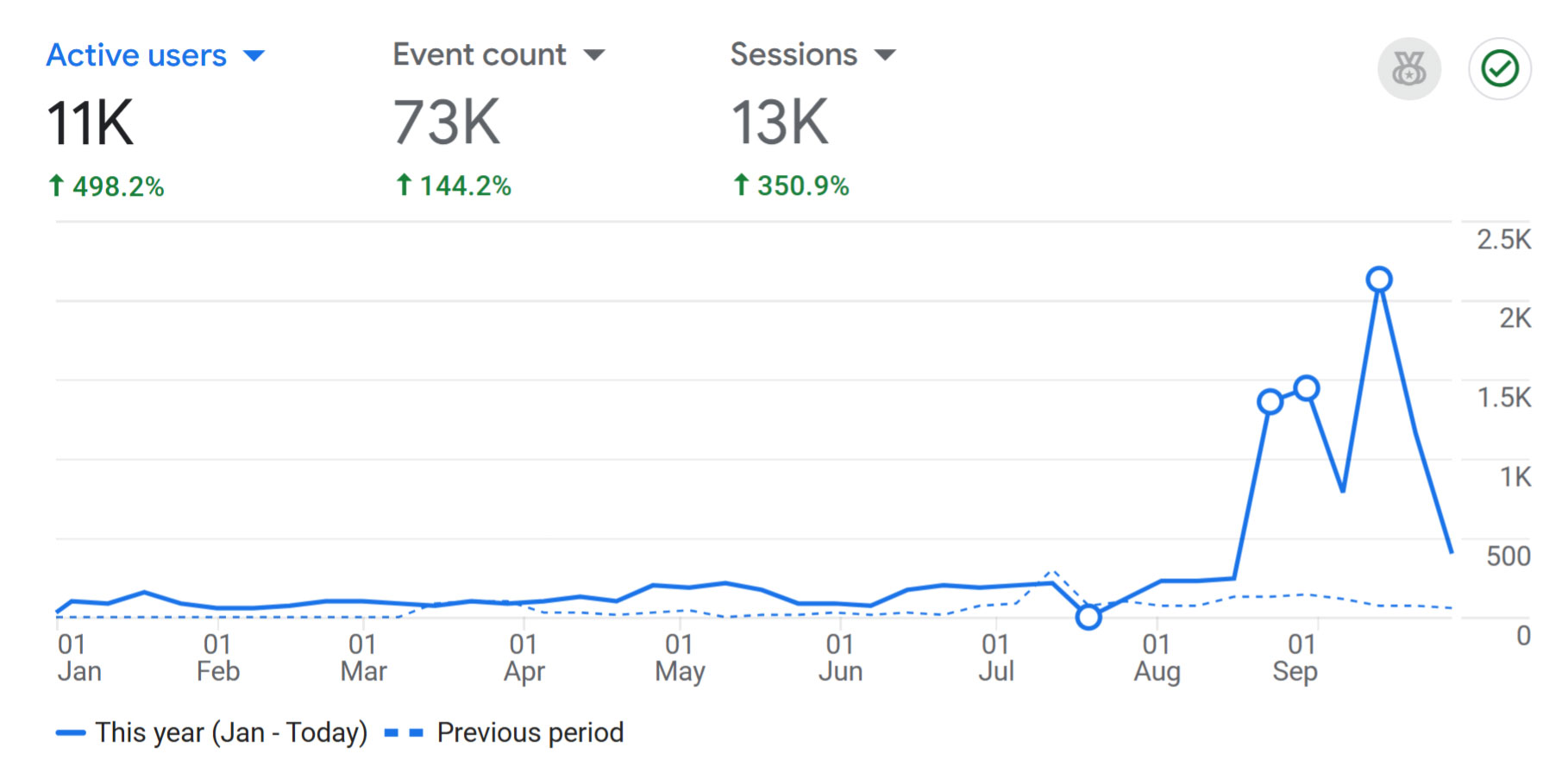
Consult Now started publishing Serpjoy posts in late July. Here's what happened to their traffic: a flat line all spring, then the climb.

You've read them... we've all read them. The same five headings, statistics with no source, stock photos, and the last paragraph that starts “In conclusion”. Readers leave, search engines don't index it, and AI has nothing new to cite.
Serpjoy acts as a senior copywriter, SEO expert and graphic designer on every post. Quality takes time, but not too much.
Before anything else, Serpjoy looks at what you're up against.
Where your experience beats what's ranking, it asks two or three short questions.
Real research on the live web, then every useful fact is paired with its source.
The article in your voice, then everything a post needs to go live.
Then it's yours. Review it in the editor, change anything, and publish.
Add your site and Serpjoy reads it: what you sell, who you sell to and how you talk. It drafts your brand settings for you, and every post follows them.
Anyone can summarise the top ten results. When your experience would make the difference, Serpjoy pauses and asks. Answer in a sentence or two and your stories, numbers and opinions go into the post. Or skip, and it writes without them.
“Disclosure first: we make Knowlith, and it's ranked first here for small SaaS teams. Add salt accordingly. We tested every other tool on the same criteria, and the worst moment was nearly always the same one: you still write every post yourself.”
Serpjoy reads dozens of pages before it writes a word: studies, documentation, industry reports and the pages already ranking. Each fact is paired with where it came from, and the statistics in your post link to their sources. Readers can trust it, and AI answers have something solid to cite.
Confluence's Free plan covers up to 10 users with 2 GB of storage, and Notion Plus costs $10 per member per month billed annually. Guru's self-serve plan charges $25 a seat with a 10-seat minimum, so its real entry price is about $250 a month.

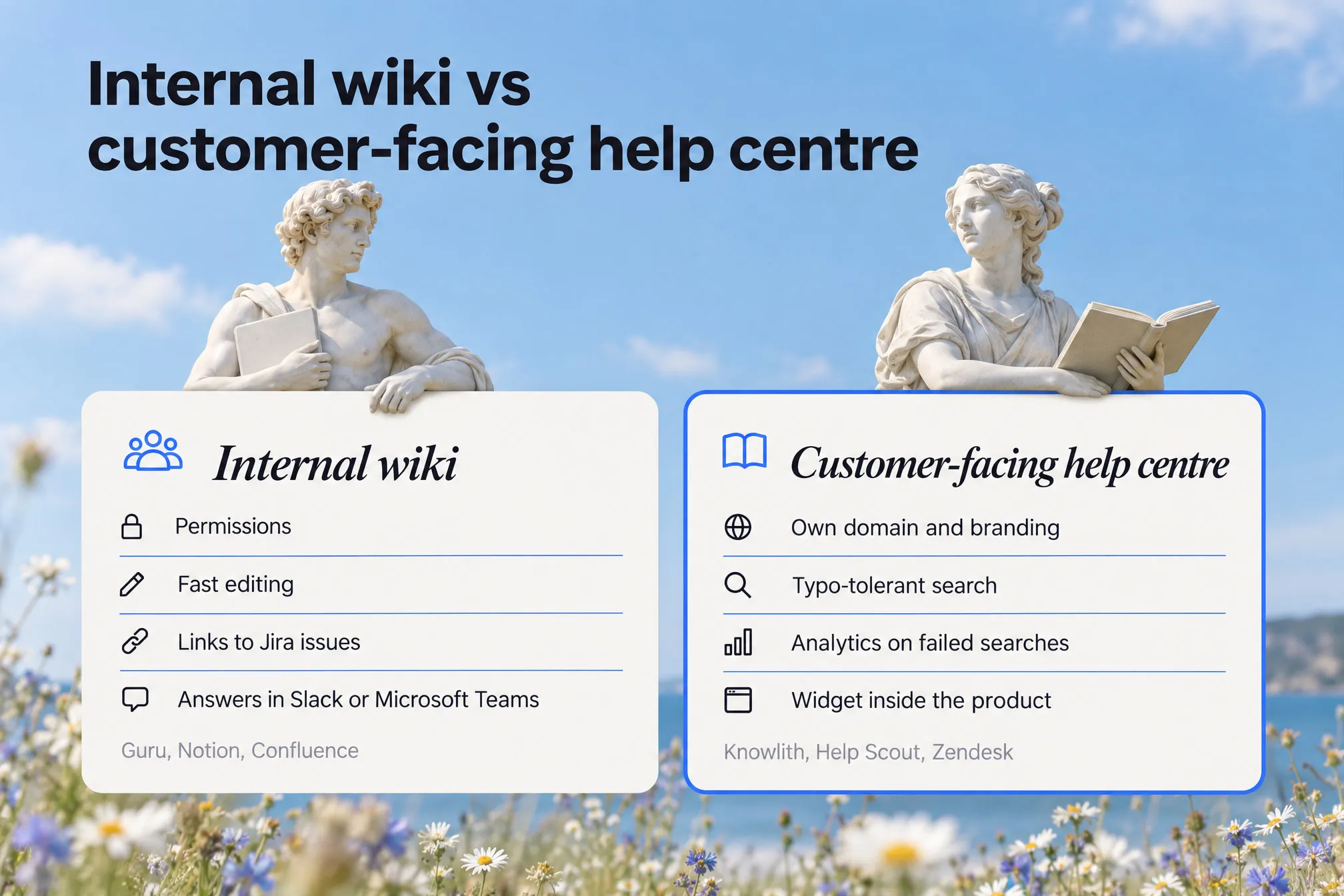
Serpjoy plans every image around the post: step-by-step guides, comparisons, cycles, stat cards and more. Upload a few reference images and every post keeps the same look, so your blog looks like your brand, not a stock library.
ALTMarble bust beside help cards29/125 characters
Start with the public side.
IMG_4829.jpg
knowledge-
16:94:31:1JPEGWebPEvery post is checked against what's already ranking before you see it: format, length, topics and the questions people ask. You get a clear checklist, not a vague score.
Serpjoy looks at what your site already ranks for and what people search for, then suggests posts you have a real chance with. You get 30 new ideas every month, each with its keyword, search volume and difficulty.
Every post opens in a clean editor. Select a sentence and ask for a rewrite, swap an image or add a link from your own pages. The SEO checklist updates as you go. When you're happy, copy the HTML or download the images.
Plenty of buyers skip that split and pay for it later. A team wiki dressed up as a public help centre still looks like a team wiki.Dress a team wiki up as a public help centre and it still reads like one. Your customers can tell.
People now ask ChatGPT, Perplexity, Gemini and Google's AI Overviews “what's the best tool for…?”. Those assistants build their answers from pages that answer clearly, with specifics and sources. That's how Serpjoy writes.
For a small SaaS team, pick a tool that's cheap to start and shows you what users can't find. Watch per-seat pricing: one popular option charges $25 a seat with a 10-seat minimum, so about $250 a month to start. 1
1yourbrand.com/blog/best-knowledge-base-softwareYour postIllustration: how an assistant quotes a clear, cited post
Try a full post on your own site before you choose a plan. Every plan includes everything; they differ only in how many posts and sites.
One complete post on your own site: research, cited facts, your voice, designed images, internal links and schema. One-time payment. No subscription starts.
For a business running its own blog or two.
For a portfolio of sites or a small agency.
For agencies publishing across many clients.
No feature tiers. The Starter post and the Scale post are the same post.
One complete post on your own site: search analysis, web research, cited facts, your brand's voice, designed images, internal links, schema and the SEO checklist. It's a one-time payment, once per workspace, and it doesn't start a subscription. If you like it, pick a plan. If not, keep the post.
Google's published guidance is that it rewards helpful, original content however it's produced, and acts against content made mainly to manipulate rankings. That's why Serpjoy researches before it writes, links statistics to their sources and asks for your first-hand experience. Thin AI content has none of those.
Nobody can guarantee what an AI assistant cites. What Serpjoy does is write the way those tools reward: a direct answer up front, specific facts with their sources, FAQs and clean structure. It also checks whether Google shows an AI Overview for your keyword and writes to earn a place in it.
Research happens before writing. Serpjoy reads dozens of sources, pairs each fact with the page it came from, and the writer works from that research. Statistics in the finished post link straight to their source, so you can check any claim in one click.
Serpjoy drafts your brand settings from your website. They cover how you sound, who you write for, your tone, the words you use and avoid, and what you can credibly claim. You can edit all of it, and every post follows it.
No. When your experience would make a post stand out, Serpjoy asks two or three short questions. Answer in a sentence or two, or skip and it writes without them.
Copy clean HTML into WordPress, Webflow, Shopify, Ghost or any CMS. Then download the images as one pack, with alt text and captions ready to paste and featured-image crops for 16:9, 4:3 and 1:1.
English (US and UK), German, French, Spanish, Dutch and Swedish. Research, search data and writing all happen in the language you choose.
Yes. Posts are shared across all your sites, so an agency can spread a plan's posts across clients however it likes. Plans include 3, 10 or 25 sites, each with its own brand settings.
No, each plan's posts reset every calendar month. If you need more in a busy month, add 10 posts for $59.
Yes, from Settings → Billing. Your plan stays active until the end of the period you've paid for, then stops. Payments and VAT are handled by Stripe.

Add your site, pick an idea, and see what Serpjoy writes. One full post for $1, no subscription, and the post is yours to keep.
Write your first post for $1 →