
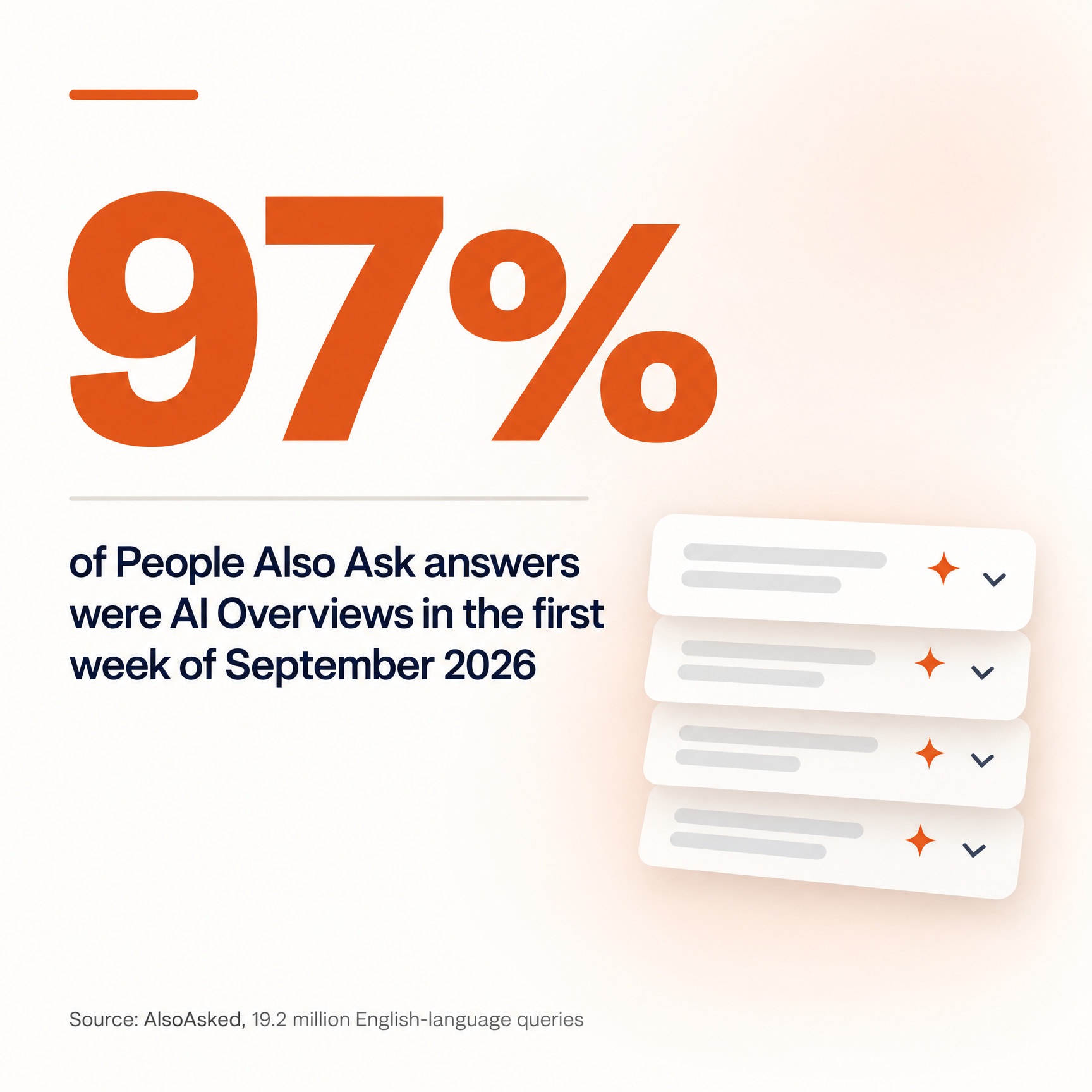
Google People Also Ask (PAA) is an expandable box of related questions in Google search results. Clicking any question opens a short answer and loads more questions below it. According to AlsoAsked data from 19.2 million English-language queries, 97% of People Also Ask answers in the first week of September 2026 were AI Overviews. That number comes from a vendor's sample, so treat it as a signal. It still changes the job. To earn visibility in PAA now, your page has to be the clearest, most direct answer to a question people already search.
Most PAA advice online still says the same thing. Find questions, add FAQ schema, wait for traffic. Two of those three have aged badly, and the answers in the box are now mostly written by Google's AI.
What Google People Also Ask Is and Where It Appears
Google People Also Ask is a SERP feature that shows a stack of related questions in the search results, each collapsed into one line until a searcher clicks it.
Google's documentation uses a drier label. Google's Visual Elements Gallery documentation groups People Also Ask under "Exploration features" and tells site owners they "can't control what shows up here."
PAA is a different feature from related searches. Clicking a related search loads a whole new results page. Clicking a PAA question opens the answer in place, on the same SERP.
The "can't control" line bothers some marketers. It shouldn't. You don't pick the questions, but you decide how well your page answers them.
That control starts with knowing how the box behaves once someone clicks.
How PAA Boxes Expand Each Time You Click a Question
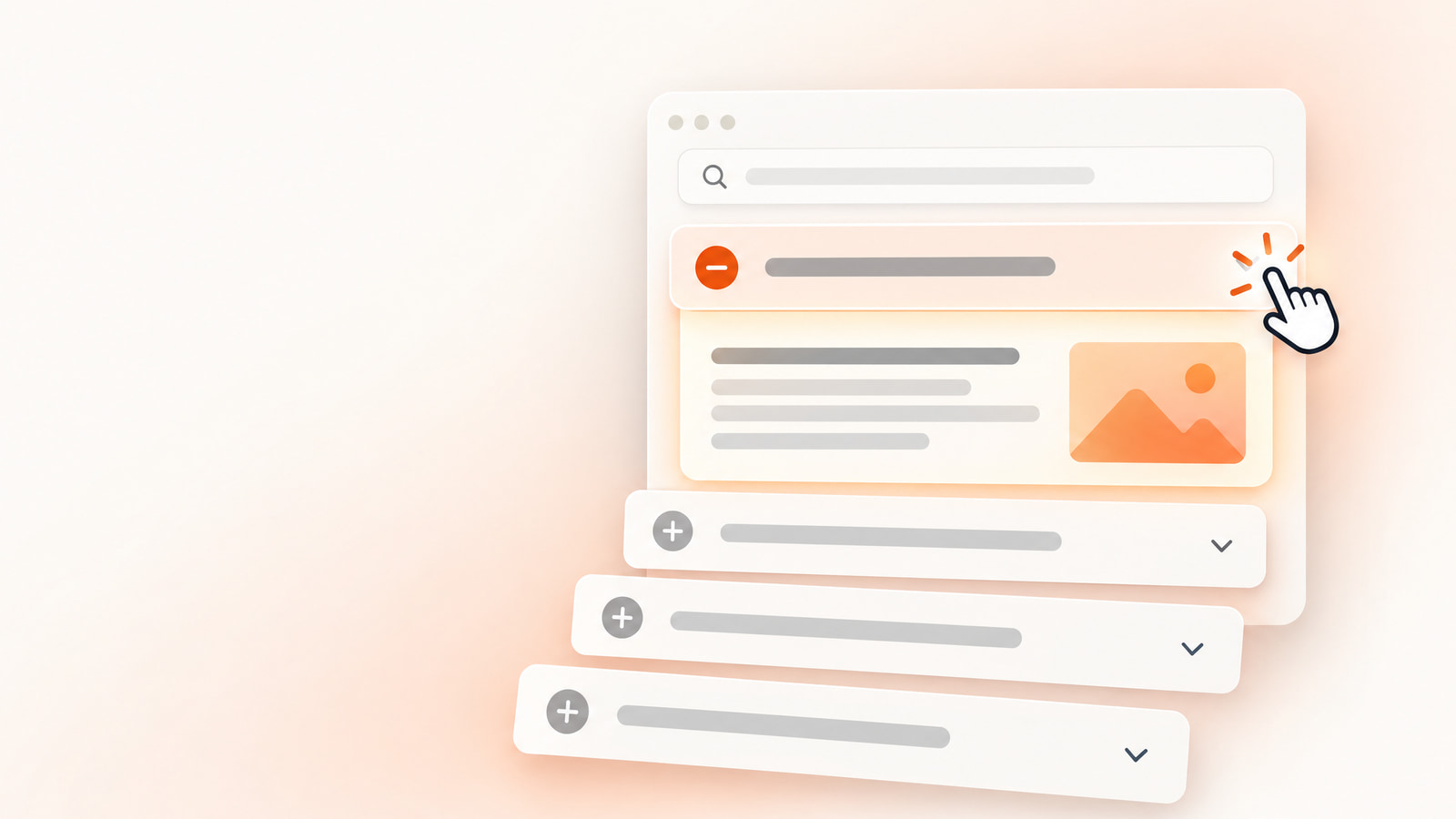
PAA boxes expand dynamically, so clicking a question opens its answer and Google adds more related questions to the bottom of the box.
The result is an accordion that keeps growing as long as the searcher keeps clicking. A short list turns into a long one. Each new question drifts a little further from the original search.
Google treats the box as a standard part of the results page. In December 2022, Google launched its Visual Elements Gallery. The launch post listed 22 visual elements most likely to appear on results pages, including "Exploration features."
That drift is useful to you.
Try a five-minute test. Search your main product category, click three different PAA questions and write down every new one that appears. That list is your first content brief, built from Google's own suggestions.
What People Also Ask Does for Visibility and Organic Traffic
People Also Ask adds SERP visibility because it is one of the places Google shows featured snippets. Google's Search Help page on featured snippets names three: the top of results, next to Knowledge Graph information and the "People also ask" section.
For a small site, that's extra real estate on results pages where the top slots are hard to win. A spot in the box puts your name in front of people who never scroll past the first few results.
The bigger payoff is research. PAA shows the follow-up questions searchers have, phrased the way they type them. For a store, those questions often map straight onto product-page FAQs, the stuff people ask right before they buy.
Organic traffic is the weaker promise. When the answer sits right there in the box, plenty of people read it and move on.
Which raises the obvious question of who writes those answers.
How Google Picks People Also Ask Answers in 2026
Google fills People Also Ask with answers that match each question's search intent and answer it clearly, and in 2026 most of those answers are AI Overviews.
The older route was the featured snippet. Google's featured snippets documentation says snippets "can also appear within a related questions group (also known as People Also Ask)." One page, one quoted answer, one link back.
That route is shrinking fast. By July 2025, nearly 13% of PAA answers were AI-generated, according to Mark Williams-Cook's AlsoAsked data reported by Search Engine Land. Back then, AI answers were the exception.
About a year later they were the rule. Search Engine Watch's report on AI-generated PAA answers puts the AI Overview share at 86% in August 2026 before it climbed further, and Williams-Cook expects it to reach 100% soon.
These are one vendor's numbers. They all point the same way. Whatever writes the answer, Google still needs pages that state it plainly, so put the answer in the first sentence under the question and save the backstory for later.
How to Rank in People Also Ask: Five Steps
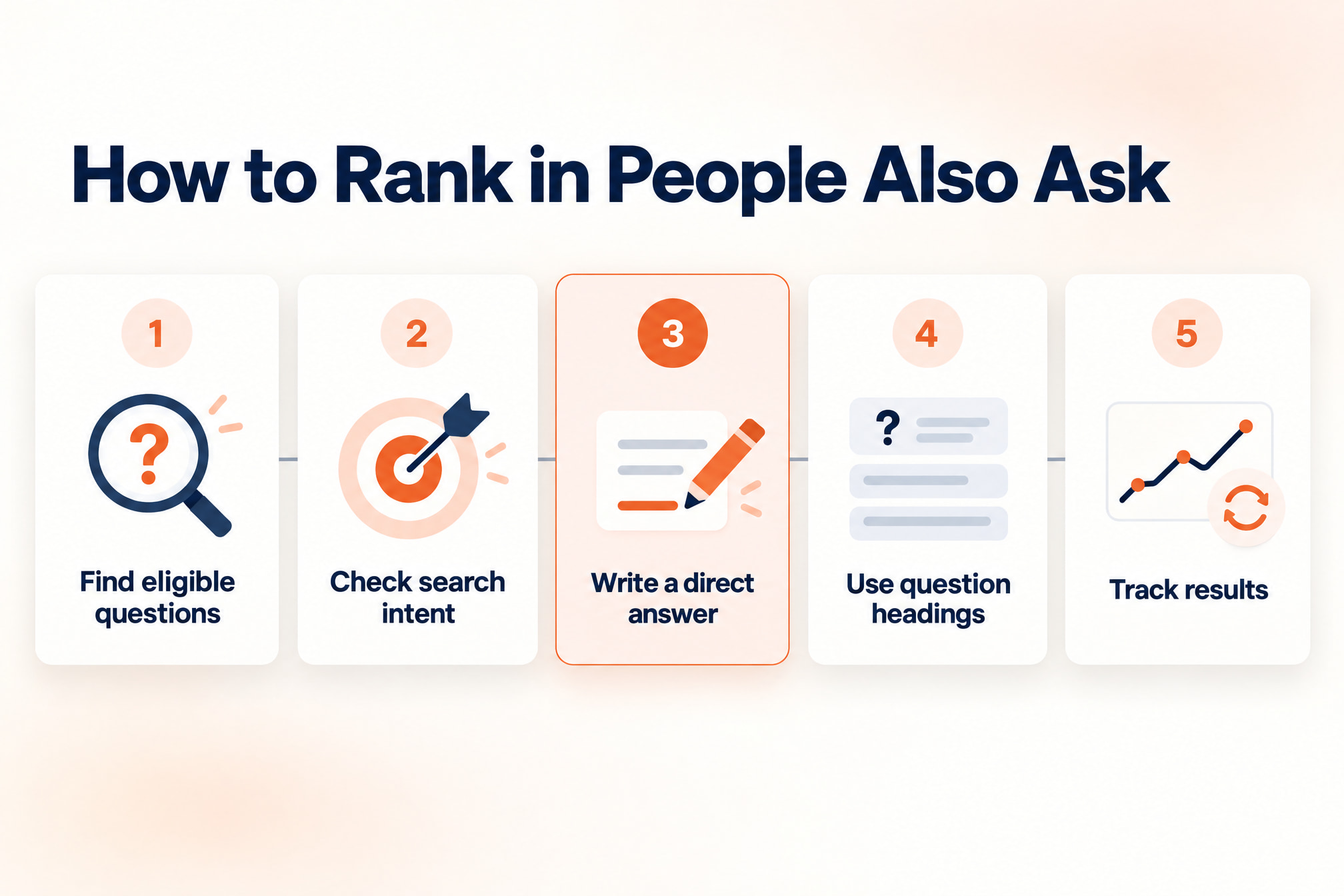
Ranking in People Also Ask takes five steps: find eligible questions, check search intent, write a direct answer, use question headings and track results.
None of this is clever. Most of it is discipline.
Step 1: Find PAA Questions Near Queries You Already Rank For
The best PAA questions to target first are tied to queries where your pages already rank on Google's first page.
Open Google Search Console, go to the Performance report and filter queries for words like "how," "what," "why" and "can." Sort by average position and keep anything in the top 10. Search each one in a private window and note the PAA questions that show up.
The sources worth adding to your question research are:
- AlsoAsked maps PAA questions into trees, so you can see which question leads to which.
- Ahrefs pulls question-style keywords from a seed term, with search volume attached.
- Google autocomplete shows how people finish a question as they type. Free and fast.
- Your inbox and sales calls hold the questions customers ask before they buy.
Questions that keep turning up across several sources go to the top of the list.
Step 2: Check the Search Intent Behind Each Question
Search intent decides what a good PAA answer looks like, so read the current answer in the box before you write yours.
"How long does a website redesign take" wants a time range. "How do I set up Search Console" wants steps. "Ahrefs vs. AlsoAsked" wants a comparison.
Match what the searcher came for. Skip the preamble.
Step 3: Write a Direct Answer in the Matching Format
A PAA-ready answer states the answer in its first sentence, in the same format Google already shows for that question.
The four answer formats that fit most PAA questions are:
| Question type | Example | Best format |
|---|---|---|
| Definition | "What is a featured snippet?" | Two or three sentence paragraph |
| Process | "How do I add a sitemap?" | Numbered list of steps |
| Comparison | "PAA vs. related searches" | Short table |
| Visual task | "How to tie a tie" | Video with a written summary |
Keep the answer short enough to lift cleanly, then add depth underneath. Write it in your voice and back every number with a cited source. Vague answers lose to specific ones.
Step 4: Turn Questions Into H2 and H3 Headings
Question-based H2 and H3 headings tell readers and Google exactly which question each section answers.
Use the searcher's phrasing. Nobody searches for your internal jargon. A short FAQ section at the end handles the smaller questions that don't need their own section.
Step 5: Track PAA Results and Refresh Answers
PAA placements change often, so recheck your target questions each month and update answers when the questions or the current answer shift.
In Google Search Console, watch impressions and clicks for the pages you rewrote. Rerun your AlsoAsked checks too. New questions appear, old ones drop out, and a refreshed answer costs less than a new post.
FAQ Schema Won't Get You Into People Also Ask
FAQPage schema is a separate feature from People Also Ask, and there is no evidence that FAQ markup helps a page appear in the PAA box.
Plenty of older guides still claim it does. The markup's main payoff was FAQ rich results, and Google has spent years taking those away.
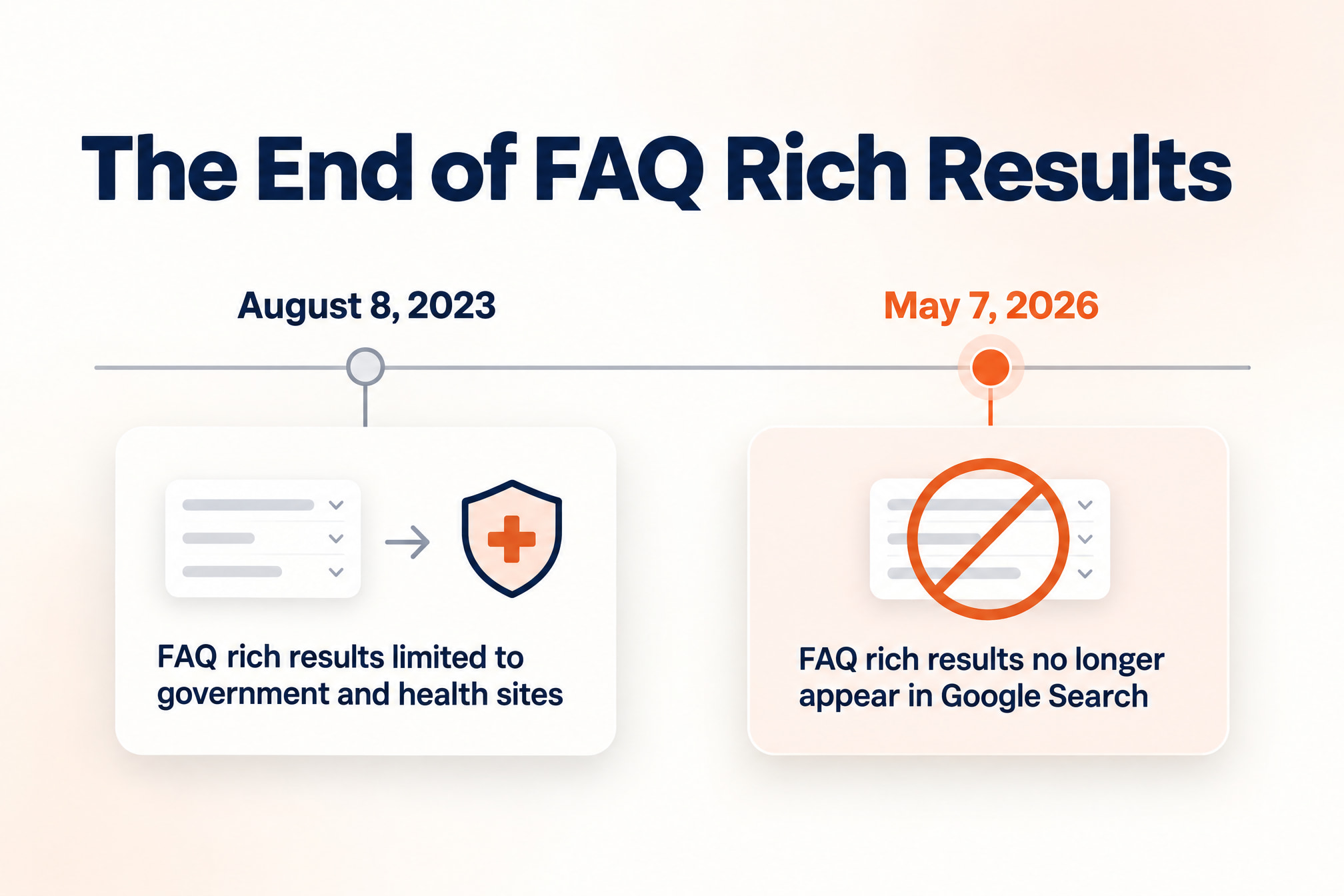
On August 8, 2023, Google's HowTo and FAQ rich results update restricted FAQ rich results to "well-known, authoritative government and health websites" and limited How-To rich results to desktop. For most sites, that ended the FAQ dropdown in search results.
Then the rest went. Google's FAQPage structured data documentation says that since May 7, 2026, FAQ rich results no longer appear in Google Search.
Keep the FAQ section for your readers. If a guide tells you FAQ schema is the route into PAA, check the date on it.
The Catch: Zero-Click Searches, Volatility and Thin Pages
The main limits of People Also Ask are zero-click searches, constant volatility, heavy competition and the temptation to churn out thin pages for every question.
Zero-click is the big one. A searcher who gets the full answer in the box has no reason to visit you. With AI Overviews writing almost all PAA answers, count on the box for visibility first and organic traffic second.
Volatility comes next. The questions shift, the answers shift, and a placement you hold today can vanish without any change on your side.
Competition is stiff too, because anyone with AlsoAsked sees the same questions you do.
The worst response to PAA data is a content plan with one thin post per question. Pages built only to catch a question are low-value, and they pile up as a liability.
Group related questions into one strong post instead. More work per page, far less work overall.
Quick Answers About Google People Also Ask
The most common questions about Google People Also Ask cover removing the box, AI-written answers, related searches and featured snippets.
How do you get rid of People Also Ask on Google?
Site owners cannot remove the People Also Ask box or choose which questions appear in it. Google's guide to exploration features says site owners "can't control what shows up here." You can limit snippets with nosnippet and data-nosnippet, but Google does not say these controls remove a page from PAA.
Are People Also Ask answers written by AI?
Most People Also Ask answers are now written by AI. AlsoAsked's sample of 19.2 million queries found that 97% of PAA answers in the first week of September 2026 were AI Overviews.
Is People Also Ask the same as related searches?
People Also Ask and related searches are different features. A PAA question expands in place and adds more questions. A related search opens a new results page.
Can a featured snippet appear in People Also Ask?
A featured snippet can appear inside People Also Ask. Google's featured snippet guidelines describe PAA as a "related questions group" where snippets can show up.
Your People Also Ask Plan for the Next Seven Days
The most useful People Also Ask work in 2026 is rewriting pages that already rank so they answer real questions in the first sentence.
Your priority order for the next seven days is:
- Today: export question queries in the top 10 from Google Search Console.
- Tomorrow: search each one and note the PAA questions and answer formats.
- Days 3 to 5: rewrite three sections with question headings and direct first sentences.
- Day 7: check impressions for those pages and search the questions again.
A good week ends with at least one rewritten page earning more impressions on its target question. Clicks may lag. That's the zero-click tax.
If you'd rather skip the manual digging, Serpjoy studies People Also Ask and AI Overviews for every post, then writes in your voice with each stat cited. Your first post costs $1.
Either way, write the answer first. The box rewards pages that get to the point.